okfun app Probability in Casino Games
Mastering Probability in Casino Games with okfun app
Understanding probability is not just for mathematicians; it's a crucial skill for anyone looking to navigate the exciting yet unpredictable world of online gambling. With the okfun app, players in the Philippines market have access to a vast array of casino games, from slots and poker to live dealer experiences. While luck undeniably plays a role, a solid grasp of probability can significantly enhance your strategic approach, allowing you to make more informed decisions and potentially improve your long-term outcomes. This advanced guide delves into the core principles of probability as applied to casino games, moving beyond simple chance to explore how sophisticated players can leverage this knowledge. We'll cover everything from theoretical probability and house edge to advanced strategies that can be implemented across various game types available on platforms like the okfun app, helping you transform from a casual player into a more strategic and discerning gambler. Prepare to unlock the mathematical secrets behind your favorite casino games and elevate your gaming experience.
Table of Contents
- Theoretical vs. Empirical Probability in Casino Contexts
- Understanding House Edge and RTP: The Core of Casino Math
- Applying Probability to Specific Casino Games
- Advanced Strategies and Risk Management through Probability
- Common Misconceptions and Pitfalls for Advanced Players
- Frequently Asked Questions
Theoretical vs. Empirical Probability in Casino Contexts
At the heart of understanding casino games lies the distinction between theoretical and empirical probability. Theoretical probability is what we calculate based on the ideal conditions of a game. For instance, the theoretical probability of rolling a '6' on a fair six-sided die is 1/6. In casino games, this applies to fixed odds scenarios like roulette or blackjack, where the number of possible outcomes and favorable outcomes are known.
Empirical probability, on the other hand, is derived from actual observations and experiments. It's the probability we calculate based on how often an event has occurred in the past. While theoretical probability provides a baseline, empirical probability can sometimes reveal deviations, especially in games with a large number of trials. For players using the okfun app, understanding both is crucial. For example, a slot machine might have a theoretical Return to Player (RTP) of 96%, but your personal empirical RTP over a few hundred spins might be higher or lower due to short-term variance. Advanced players recognize that while theoretical probability dictates the long-term outlook, empirical data can inform short-term strategy adjustments and help manage expectations. It’s about understanding the game’s inherent fairness (or unfairness) and how it plays out in real-world scenarios.
Understanding House Edge and RTP: The Core of Casino Math
The house edge and Return to Player (RTP) are two fundamental concepts in casino probability that every advanced player on the okfun app should master. The House Edge represents the casino's built-in advantage, expressed as a percentage of the player's initial bet. It's the long-term average profit the casino expects to make from each wager. For instance, a game with a 2% house edge means that, on average, for every 100 PHP wagered, the casino expects to keep 2 PHP over an infinite number of plays.
Return to Player (RTP) is the inverse of the house edge, typically expressed as a percentage. It's the theoretical percentage of all wagered money that a slot machine or casino game will pay back to players over time. A game with a 96% RTP means that, over the long run, 96% of all money put into the game is returned to players, with the remaining 4% being the house edge. For advanced players, choosing games with a higher RTP significantly improves your theoretical chances of winning and minimizes long-term losses. This is particularly relevant for games offered by providers like JDB Gaming, AP Gaming, and JILI Games on the okfun app. Always prioritize games with the most favorable RTP to maximize your strategic advantage.
Applying Probability to Specific Casino Games
Advanced players on the okfun app don't just play games; they analyze them through the lens of probability. Here's how probability applies to popular casino games:
-
Blackjack: This is perhaps the quintessential game for applying probability. Basic strategy charts are entirely derived from mathematical probabilities, telling you the optimal play for every possible hand combination against the dealer's upcard. Understanding concepts like card counting (though often impractical online) is rooted in changing probabilities as cards are removed from the shoe. Knowing the probability of busting with another hit, or the dealer busting, is fundamental.
-
Roulette: Roulette is a game of fixed probabilities. For European Roulette, the probability of hitting a single number is 1/37 (2.70%), and for American Roulette, it's 1/38 (2.63%) due to the extra double zero. Understanding these fixed odds helps players assess the value of different bets. For example, betting on red/black has a nearly 50% chance, but the payout is 1:1, reflecting the lower risk compared to a single-number bet with a 35:1 payout.
-
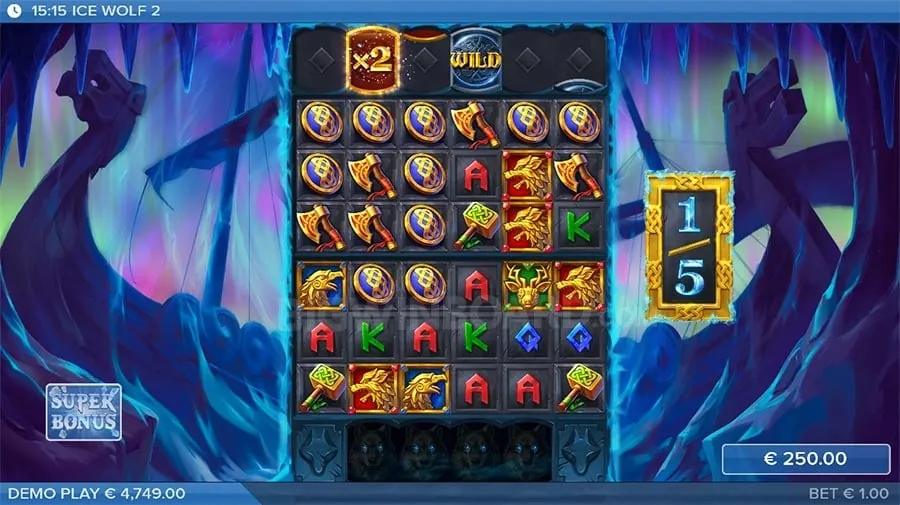
Slots: While seemingly random, slot machines operate on sophisticated Random Number Generators (RNGs) and are governed by their programmed RTP. Advanced players understand that each spin is an independent event, and past results do not influence future outcomes. The probability of hitting a jackpot on a slot from providers like Play’n GO or JILI Games is extremely low, but understanding the variance (how often and how much a slot pays out) can help manage bankroll and expectations.
-
Poker (e.g., Texas Hold'em): Poker is a game of incomplete information where probability is paramount. Players constantly calculate 'pot odds' (the ratio of the money in the pot to the cost of calling a bet) against 'out odds' (the probability of hitting a card that improves their hand). This involves estimating the probability of drawing certain cards, the probability of opponents holding stronger or weaker hands, and the probability of winning the showdown. This dynamic calculation is what separates skilled poker players from casual ones.
-
Baccarat: Baccarat has one of the lowest house edges among casino games, especially on the Banker bet. The probabilities are relatively straightforward: Banker wins slightly more often than Player, which is why a commission is typically taken on Banker wins. Understanding these fixed probabilities allows players to make the statistically most advantageous bets.
By dissecting each game on the okfun app through a probabilistic lens, advanced users can transform their gameplay from mere entertainment into a calculated strategic endeavor.
Advanced Strategies and Risk Management through Probability
For the seasoned player on the okfun app, advanced strategies are deeply intertwined with a sophisticated understanding of probability and effective risk management. It's not just about knowing the odds, but about using that knowledge to inform betting patterns and bankroll allocation.
-
Optimal Bet Sizing: Probability helps determine the optimal bet size. For games like blackjack or video poker where player decisions influence the outcome, understanding the expected value (EV) of a decision allows players to bet more aggressively when the EV is positive and conserve funds when it's negative. In games of pure chance like roulette, bet sizing can be adjusted based on desired volatility and potential payouts, though the house edge remains constant.
-
Bankroll Management based on Variance: Different games have different levels of variance (how much and how often a game pays out). High-variance slots, for example, offer large jackpots but pay out less frequently. Low-variance games pay out more often but in smaller amounts. Advanced players use probability to understand a game's variance and set a bankroll that can withstand potential losing streaks, ensuring they have enough capital to stay in the game until positive outcomes materialize. This is crucial when playing games from various providers like JDB Gaming or VA Gaming.
-
Exploiting Promotional Offers: Promotions and bonuses offered by the okfun app can sometimes shift the odds in the player's favor, at least temporarily. Advanced players calculate the expected value of these offers, considering wagering requirements and game contributions. For example, a bonus with a 20x wagering requirement on a slot with 96% RTP might still be profitable if the initial bonus amount is significant enough to offset the expected losses during wagering.
-
Understanding Conditional Probability: In games like poker, conditional probability is key. The probability of hitting a flush on the river changes dramatically based on the cards already dealt on the flop and turn. Advanced players continuously update their probability calculations as new information becomes available, making more accurate decisions about folding, calling, or raising.
By integrating these advanced strategies, players can move beyond simply hoping for a win and instead engage in a more calculated and disciplined form of online gambling on the okfun app.
Common Misconceptions and Pitfalls for Advanced Players
Even advanced players can fall prey to common misconceptions if they don't maintain a rigorous probabilistic mindset. Avoiding these pitfalls is crucial for sustained strategic play on the okfun app:
-
The Gambler's Fallacy: